Showing posts with label spring. Show all posts

Thursday, 7 April 2011

More spring flowers and a tiny apricot

IMGP8445
Apple blossom – there’s much more than last year.
IMGP8464
Cherry blossom – our first year.
IMGP8451
A rather raggedy iris.
IMGP8456
The bay trees are covered in flowers.
IMGP8449
The broom is flowering here in the garden and all over the hills in the garrigue.
IMGP8468
There aren’t many apricots on our tree, but it’s going to be a better year than last year.

And the last of the red cabbages

IMGP8476

There were three small red cabbages left and threatening to go to seed, so we picked them all this morning, sliced them and cooked them with two sliced onions sautéed in olive oil, a tablespoonful of whole cumin seeds, two tablespoons of brown sugar, a cup of red wine vinegar and a cup of water, plus some salt and pepper, left it all to simmer for about 45 minutes until the cabbage was cooked. It can now be frozen in meal-sized bagfuls.

Sunday, 27 February 2011

When does the gardening year start?

One of the things I like about gardening, especially in the Mediterranean climate, is that the year doesn’t seem to end, or rather the seasons merge into each other and we’re always looking forward to something.  As we take up and burn the dead tomato plants in the autumn we’re starting to sow broad beans and peas and thinking of spring, and all through winter we cut salad and other leaf vegetables from the garden.  But if I had to choose a start to the gardening year it would be now when we are sowing our tomato plants and soon will be sowing peppers and courgettes, because these Mediterranean vegetables seem to be the most important in our cooking and in most gardens in this area.  So I felt very excited this morning when we sowed seven varieties of tomato seeds:

Roma and Andean for sauces and bottling

Ananas and Coeur de Boeuf for salads

Languedoc – a local variety which is well adapted to hot dry conditions

Saint-Pierre – an all-round variety which usually crops well, although not so well last year

Marmande – a variety from the south-west of France, which didn’t do very well last time we grew it here (maybe it’s too hot and dry for it), but we’re giving it another chance this year

All these varieties of seeds are now on the seed starter box which Lo Jardinièr made two years ago.  As soon as the tomatoes have germinated we’ll start the peppers on it.

IMGP6878 IMGP6894

The new gardening year has begun!

Sunday, 6 February 2011

Perfect Sunday

We know it won’t last and it will be cooler again in the next few days, so with the temperature over 20 degrees we took advantage of the glorious weather today and cooked our first lunch in the garden this year.

But first some planning for this year…

IMGP6275 IMGP6276

I sat in the sun and roughed out a plan for planting this year… I hope we’ve got room for everything!  We may not follow the plan exactly but will use it as a guide.

The autumn sowing of mangetout peas seemed to have suffered from the cold, so I sowed another row, while Lo Jardinièr did some weeding and dug in some of the horse manure we collected yesterday.

an apéritif…

It was busy at the gardens this morning, with many out enjoying the sun, and one of the friends who stopped to chat joined us for an apéritif.

IMGP6284

and then some lunch…

IMGP6302 IMGP6315

Red pepper, sweet onion and oregano salad, followed by barbecued lamb chops and onions.

Birds and insects

The birds certainly thought it was spring and were flirting and nesting in the bay trees at the end of the garden.  There were a lot of bees and carpenter bees on the rosemary flowers, the blue-black wings of the carpenter bees glistening in the light.

IMGP6342 IMGP6344 IMGP6345

Carpenter bees are interesting, big, shiny and noisy. We see them in the garden all through the spring and summer, often inspecting the holes in the ends of bamboo poles, one of the places where they like to nest.  When I googled the name for more information I was shocked to find that many of the results consisted of information as to how to use pesticides to get rid of these bees, but in the garden they seem to do little damage and a lot of good, pollinating the flowers.  For more information see this link.

Monday, 31 January 2011

Time to sow more broad beans

Today and tomorrow are said to be good days in the phases of the moon for sowing broad beans.  Conditions in the garden were good for this too, after rain at the weekend and the horse manure we’d spread over the bean bed the previous weekend.  We sowed the rest of a packet I bought last year of Sevilla broad (fava) beans, as well as some we had saved from last year’s crop.  The plants sown in the autumn are doing well and don’t seem to have suffered from the cold as they did in last year’s severe frosts.

IMGP6086


The rosemary has been in flower all through the winter, the garlic is growing well and there is bright green new growth on the olive trees following the pruning.

IMGP6082 IMGP6097 IMGP6091


IMGP6088


The chard and spinach plants seem to be starting to grow again, the red cabbages are hearting up and a few small turnips were ready to eat for lunch today.


In most of the vineyards around the village there was a lot of slow, cold work going on.  Each vine has to be pruned by hand, one at a time, between November and March, when the viticulteur/euse chooses which are the best shoots to bear this year’s crop.  In the picture below, these old vines (probably about 50 years old) have not yet been pruned.  In the background there’s an olive grove and a mimosa tree in flower.  A typical view of early spring in the Languedoc.

IMGP6077

Thursday, 13 January 2011

A hint of spring?

This morning for the first time for weeks the sun felt hot and it was 16 degrees C in the garden.  I know the winter’s not over yet – we’re not even half way through January – but there was a suggestion in the air that spring may arrive eventually.

The garden in January

Just for the record, this is what the garden looked like this morning.

IMGP5395 IMGP5394

The rosemary has been flowering all winter and there were bees on it today.  The broad beans look much better than they did this time last year and don’t seem to have been affected at all by the cold nights we had last month.

IMGP5385 IMGP5393

Olive pruning

IMGP5286 IMGP5305 IMGP5343

I spent some time pruning the second of our two olive trees, the Lucque,  not too drastically as it is still a very young tree that we planted only five years ago.

IMGP5381 IMGP5382
Before (left), during (above) and after (right)
IMGP5384

The main aim when olive pruning is to open out the centre of the tree so I pruned any branches that were growing inwards, and I cut some of the straggly branches at the top.  It’s growing into quite a nice little tree and it produced some good olives last year.

And a cauliflower

IMGP5281

We picked this cauliflower – probably our last for this year, but there are still plenty of leaf vegetables: lettuces, red and green cabbages, spinach and chard, as well as some turnips, to feed us for the rest of the winter.  The garlic and onions we planted in the autumn are all growing well too.

Tuesday, 23 March 2010

Spring in the garden at last

The path to the garden

DSC02386

strewn with a confetti of almond blossoms from our neighbour’s tree.

DSC02379
Anemones de Caen
DSC02381 Aubretia, daffodils and grape hyacinths
DSC02384 bees on the apricot blossom DSC02380 and a lizard in the sun.

Wednesday, 17 March 2010

No swimming, but plenty of water

DSC02270

The reservoir at the spring above the gardens is full for the first time for a year, and the stream running down from it is rushing with water for the gardens ….

DSC02273 The old building under the wall of the reservoir. DSC02294
DSC02274 One of the mills half way down the hill. DSC02278
DSC02277 DSC02280

The apricot blossom is opening at last, and it was 20 degrees C when we had lunch in the garden today.  Dare I say that spring is here?

DSC02285 DSC02288 DSC02291

Saturday, 20 February 2010

Spring stops and starts

This week we’ve had some heavy rain, a couple of cold nights and some sunny days when the air almost felt warm – typical February weather really.

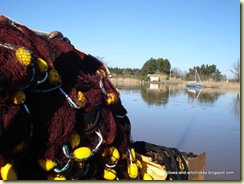
The river Hérault was full, flooding in places and carrying huge tree trunks and other debris down to the sea at le Grau d’Agde.
DSC01732

DSC01728

The fishermen had left their nets in colourful piles at the side of the river.

DSC01748
This almond tree near Roujan is coming into flower.
DSC01753

The best sign of spring for us is the germination of our tomato seeds. We sowed them last Sunday and put the seed trays on the heated seed starter box. The winners – first to germinate – were the ananas (pineapple) tomato seeds which took only three days. Since then the other varieties have all shown at least some sign of germination and the seedlings will be ready to go in the mini-greenhouses on the balcony in the sun in a few days’ time.

DSC01769
The tomato seed trays yesterday, above, with only the ananas seedlings showing (left, corner), and today, right, with seeds of all varieties having germinated.
DSC01778

The varieties of tomato we’ve sown are:

Roma: from a packet of seeds bought last year and only half used. These are plum tomatoes which are good for preserving as tomato purée to use in winter.

St Pierre: also from a packet of seeds bought last year. These grew well last year as all-purpose tomatoes for salads and sauces, as well as preserving as we do with the Roma.

Ananas (pineapple): seeds saved from last year’s tomatoes, on plants grown from seed we’d sown the year before. These big tomatoes are great for salads in summer – they have beautiful pink and yellow flesh and are very sweet.

Coeur de boeuf: seeds saved from last year’s tomatoes. Another delicious variety of tomato for salads.

Longue des Andes: seed from tomatoes given to us last year by our friend Simone, in her garden just down the hill from ours. A long red variety.

Languedocienne: seed from tomatoes we grew last summer on plants given to us by our friend Mel. An old local variety. The plants are very drought resistant and suited to the climate here, not very productive but tasty.

Yellow pear: seed from tomatoes we grew last year from bought plants. As the name suggests, they are pear-shaped cherry tomatoes and look great mixed in a bowl with red cherry tomatoes.

Cherry tomato: seed from a packet, given to us by our neighbour José.

Big cherry tomato: seed given to us by José from tomatoes he grew last summer.

So, this year we haven’t bought any tomato seeds and if these all grow we won’t need to buy any plants either.